

Okta expands identity services into runtime enforcement for AI agents
The identity provider is moving into the runtime path with an Agent Gateway to prevent AI agents from taking unintended actions in enterprise systems.
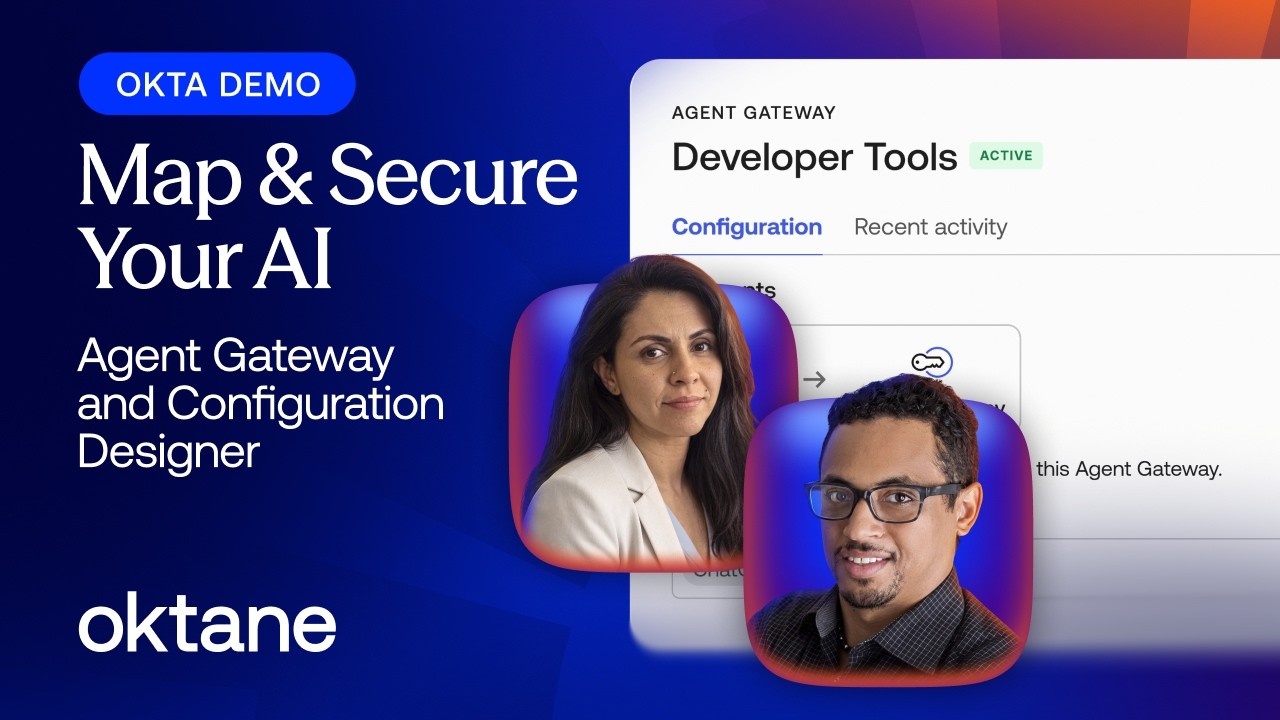
Okta is expanding its identity services into runtime enforcement via an Agent Gateway to govern the actions of AI agents within enterprise systems [8].
The move shifts the identity provider's role from granting initial access to evaluating the active behavior of software acting on behalf of users [8]. This transition comes as enterprises deploy autonomous agents across enterprise systems, creating risks of unintended actions [1].
Okta shifts from access control to runtime enforcement
Okta is moving into the runtime path through its Agent Gateway, transitioning from the traditional role of granting access to evaluating what agents seek to do in real time [8]. Ric Smith, president of products and technology at Okta, said, "We had not been inline, so with us moving in that direction, it means that we can do a lot more decision-making" [8].
These tools are designed to manage identity security within the flow of work as agents call tools and delegate tasks across various applications [8].
Addressing risks of agent misalignment
The primary risk for AI agents is not necessarily hacking, but misalignment [1]. Harish Peri, senior vice president and general manager of AI security at Okta Inc., said, "The real risk with agents that we’re seeing is not that [they’re] going to get hacked per se" [1]. He claimed the greater danger is an agent taking an action never intended by the user, despite having no bad intention [1].
To mitigate this, Okta asserts that every agent must have its own unique identity [1]. Peri warned that using shortcuts, such as overloading a single service account or allowing agents to impersonate users, becomes unsustainable once an enterprise deploys more than 10 to 15 agents [1].
Okta's architecture employs delegation with downscoping to manage authority [1]. This ensures an agent never exceeds the maximum allowable scope of the parties in the chain; for example, an agent invoked by frontline personnel cannot take actions reserved for a manager [1].
Operationalizing governance through logging
Enterprises require a single unbroken chain of logs to prove the series of actions an agent took if a failure occurs [1]. This chain of custody is necessary for administrators to explain and fix errors in the worst-case scenario [1].
Okta uses an internal tool called Dex to manage this complexity [8]. Dex allows employees to access specialized agents without navigating multiple interfaces by calling scoped sub-agents [8]. These sub-agents are restricted to specific tasks, such as handling expenses or IT help desk requests, to maintain security and efficiency [8].
Building an industry standard for the agentic stack
The effort to secure AI agents extends beyond a single vendor. Okta is part of the Blueprint Alliance, a collaboration of vendors creating a reference architecture to secure the "agentic stack" [8]. Charlotte Wylie, senior vice president and deputy chief security officer at Okta, said the industry must galvanize to provide a referenceable position for customers [8].
This push for identity-first security aligns with broader warnings from the Cybersecurity and Infrastructure Security Agency (CISA), which identifies identity as the top target and a primary vector for cloud breaches [2]. According to a Forrester evaluation, Okta is a strong fit for medium and large enterprises operating diverse, multicloud environments seeking an independent, full-scope workforce IAM platform [5].
What we don't know
- How the system will resolve conflicting insights across different security platforms regarding a specific agent action.
- The specific technical mechanisms behind "Agent SSO" and the "Agent Gateway."
- Which other vendors are members of the Blueprint Alliance.
Sources
- AI cybersecurity shifts to governing agents with Okta identity — siliconangle.com, Oct 28, 2026
- Identity-First Security: How to Defend Against Cloud Breaches — pingidentity.com, Oct 28, 2026
- The Forrester Wave™: Workforce Identity Security Platforms, Q2 2026 — redmondmag.com
- Three insights you may have missed from theCUBE’s coverage of Okta’s Oktane event — siliconangle.com, Oct 24, 2026